
Natural Stone or Smooth Pebble for a Reflexology Path
The choice of surface material in a reflexology path is not a visual decision. It is a functional one. What the path looks like matters, but what it feels like underfoot determines whether it is used daily or walked twice and forgotten.
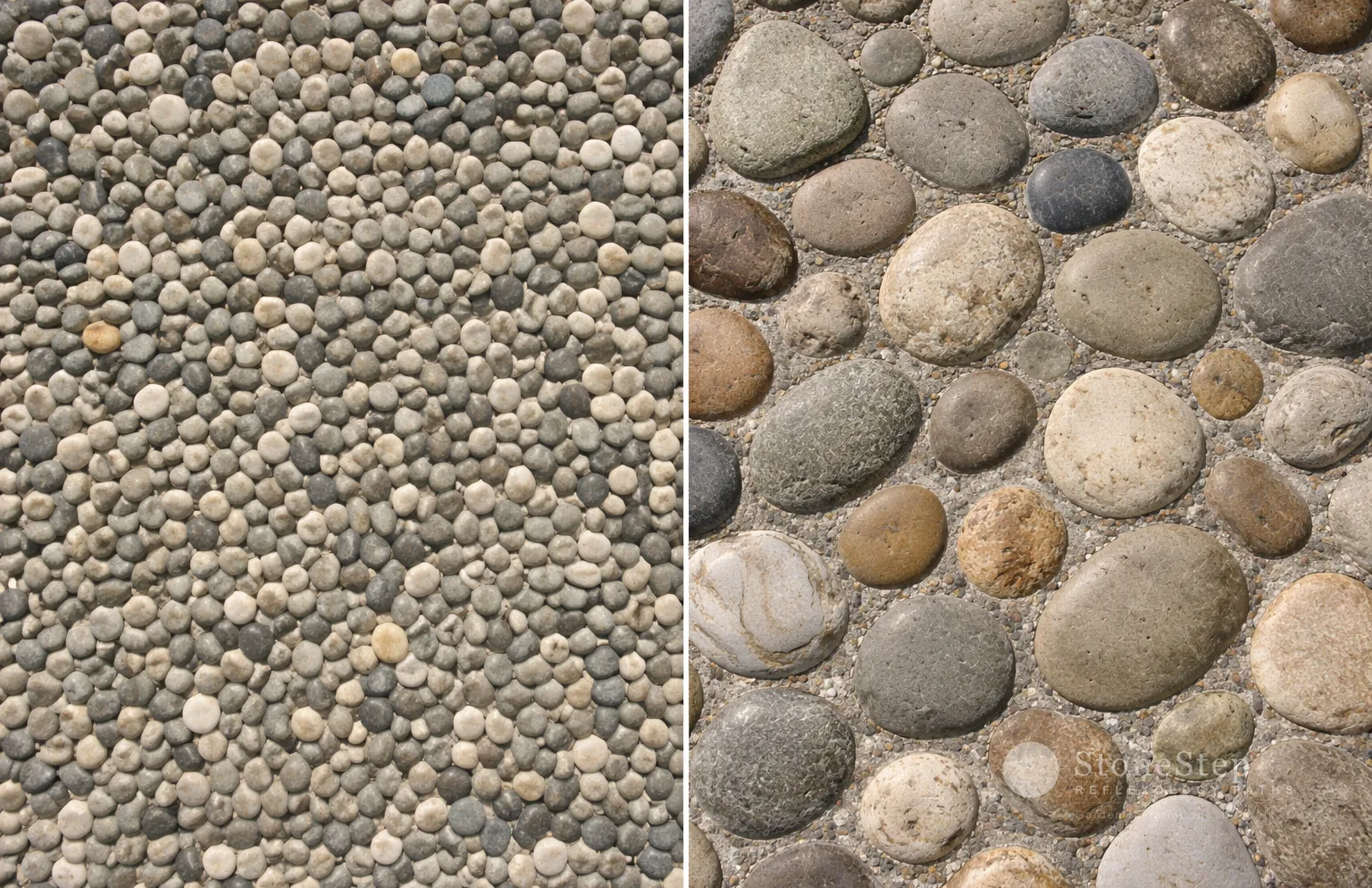
The two most common approaches are smooth rounded river pebbles, the material most closely associated with traditional Asian reflexology paths, and varied natural stone surfaces, which can range from rounded cobbles to more textured quarried stone. Both are legitimate choices. They produce different experiences and suit different intentions.
This guide works through the practical differences so you can make the choice that fits how you intend to use the path.
What Smooth River Pebbles Offer
Smooth river pebbles are the traditional reflexology path material. In Taiwanese and South Korean public parks, where stone-path walking has been a daily practice for generations, the surface is almost always a dense arrangement of smooth, water-rounded river pebbles set on edge or flat into a mortar bed.
The defining characteristic of a smooth pebble surface is its consistency of sensation. Each stone curves gently away from the foot, offering sustained pressure across the arch and ball without sharp points or abrupt transitions. The stimulation is continuous and relatively even. The foot moves across the surface in a rolling pattern, engaging the reflexology points progressively rather than in sudden contacts.
For first-time users, smooth pebbles are more accessible. The learning curve is shorter. The surface is intense enough to engage the nerve endings meaningfully, but not so demanding that it discourages regular use. For older adults or anyone returning to barefoot outdoor walking after years in heavily cushioned footwear, a smooth pebble surface is the right starting point.
Smooth river pebbles are also the most visually coherent surface for a reflexology path. Closely packed, they produce a mosaic-like appearance that is distinctive and considered. The natural colour variation between individual pebbles, river stones carry a range of tones from grey through to warm brown and occasional rust, gives the path a surface character that could not be replicated with any manufactured material.
The limitation of a smooth pebble surface is, in some respects, its virtue. The consistency of sensation means the path provides a particular kind of stimulation very well, but does not vary much between one section and another. For users who have been walking a smooth pebble path for months and want a more demanding experience, it eventually reaches a ceiling.
What Varied Natural Stone Offers
A reflexology path built from varied natural stone, using a combination of larger rounded cobbles, smaller pebbles in different sizes, and occasional sections of more textured stone surface, provides a different and more graduated experience.
The key difference is in the variation. Where smooth pebble paths are relatively consistent, a varied stone path changes underfoot as you move along it. Sections of smaller, closely-packed pebbles engage the whole foot with gentle even pressure. A zone of larger, rounder cobbles concentrates weight onto fewer points with more intensity. A section of slightly more textured stone produces a different quality of contact again. Moving through these zones, slowly and with attention, engages the foot’s reflex points in a broader and more dynamic way than a uniform surface can.
For users who have experience with barefoot walking or reflexology, or who are specifically interested in using the path as a therapeutic practice rather than a gentle daily ritual, a varied stone surface is more responsive to their needs.
Varied stone surfaces are also more flexible in terms of design intent. A path that transitions through clearly defined zones can be designed to produce a specific progression of sensation, beginning gently and building through the central section before returning to something quieter at the end. That kind of intentional design is not possible with a uniform pebble surface.
The trade-off is in accessibility. A varied stone surface, particularly one that includes larger cobbles, can be challenging for feet that are not accustomed to barefoot surfaces. The recommendation for anyone beginning with a varied stone path is to start slowly: a few minutes at a time, on the gentler zones, building toward the more demanding sections as the feet adapt over weeks.
The Case for Combining Both
In practice, the most effective residential reflexology paths we install in Co. Louth combine both approaches.
A path that uses smooth river pebbles for its transitional zones, at the start and end of the walkable length, and varied natural stone including larger rounded cobbles through the central section, gives users the accessibility of a smooth surface and the depth of stimulation of a varied one. The progression from smooth to textured and back again is something the foot reads clearly. It structures the walk without requiring deliberate thought about where to put your feet.
This combination also produces the most visually interesting path. The tonal and textural variation between the two surface types creates a composition that reads as designed rather than assembled. The arrangement of stones in the transition zones between smooth pebble and varied cobble requires care and craft; those transitions are where the quality of the installation is most visible.
Stone Sourcing for Co. Louth
For residential reflexology paths in northeast Ireland, we use a combination of natural Irish river pebbles, sourced from domestic suppliers, and selected smooth cobbles in specific size ranges. Where varied textured zones are part of the design, we draw on rounded quarried stone with natural surface character.
We do not use manufactured or tumbled stone for reflexology path surfaces. The variety of size, shape, and surface character in natural stone is part of what makes the path effective. A uniform manufactured pebble, identical in size and texture, produces a surface closer to a rubber mat than a reflexology path. The naturalness of the material is not incidental.
For a full account of how these surfaces are constructed and what the building process involves, see our reflexology garden paths service and our guide to how reflexology paths work.
Request a free design consultation →
Frequently Asked Questions
Is one approach more suitable for older adults? Smooth river pebbles are generally more appropriate for older adults or anyone new to barefoot stone walking. The consistent surface is easier to read underfoot, reduces the risk of unexpected contact with a larger stone, and allows confidence to build gradually. A wider path (at least 1m) and a handrail are additional considerations worth discussing.
Can both surface types be used by children? Yes. Children respond well to both. The smooth pebble surface tends to be more immediately appealing to younger children, who find the sensory experience engaging without it being demanding. Older children and teenagers who are curious about the reflex stimulation aspect tend to be more interested in the varied surface.
Does one approach require more maintenance than the other? Both are set in a mortar bed and are essentially maintenance-free structurally. Smooth pebble surfaces may collect slightly less debris between stones than varied surfaces with larger gaps. Both benefit from a periodic rinse with a garden hose and a brush.
How do I know which approach is right for my garden? The starting point is how you intend to use the path. If the intention is a daily gentle practice accessible to all ages, smooth river pebbles or a predominantly smooth surface with one varied central zone is the right choice. If the intention is a more specific therapeutic practice for one or two regular users who are interested in deeper stimulation, a varied stone surface or combined path gives more of what you are looking for. We discuss this on every site visit and design to the specific brief.
Have a question about your garden?