
Reflexology Path Aftercare and Running Costs in Ireland
A reflexology path is a permanent installation. It is built into the ground, set in mortar, and designed to remain where it is for decades. What it needs from you after installation is modest, and it is worth setting out clearly what that involves before the path is built.
This post covers the ongoing maintenance a reflexology path requires in a Co. Louth garden, what each task involves, and the realistic cost in time and money over the years.
What Makes a Reflexology Path Different from Standard Paving
In terms of ongoing maintenance, a reflexology path differs from standard natural stone paving in one significant way: the surface texture.
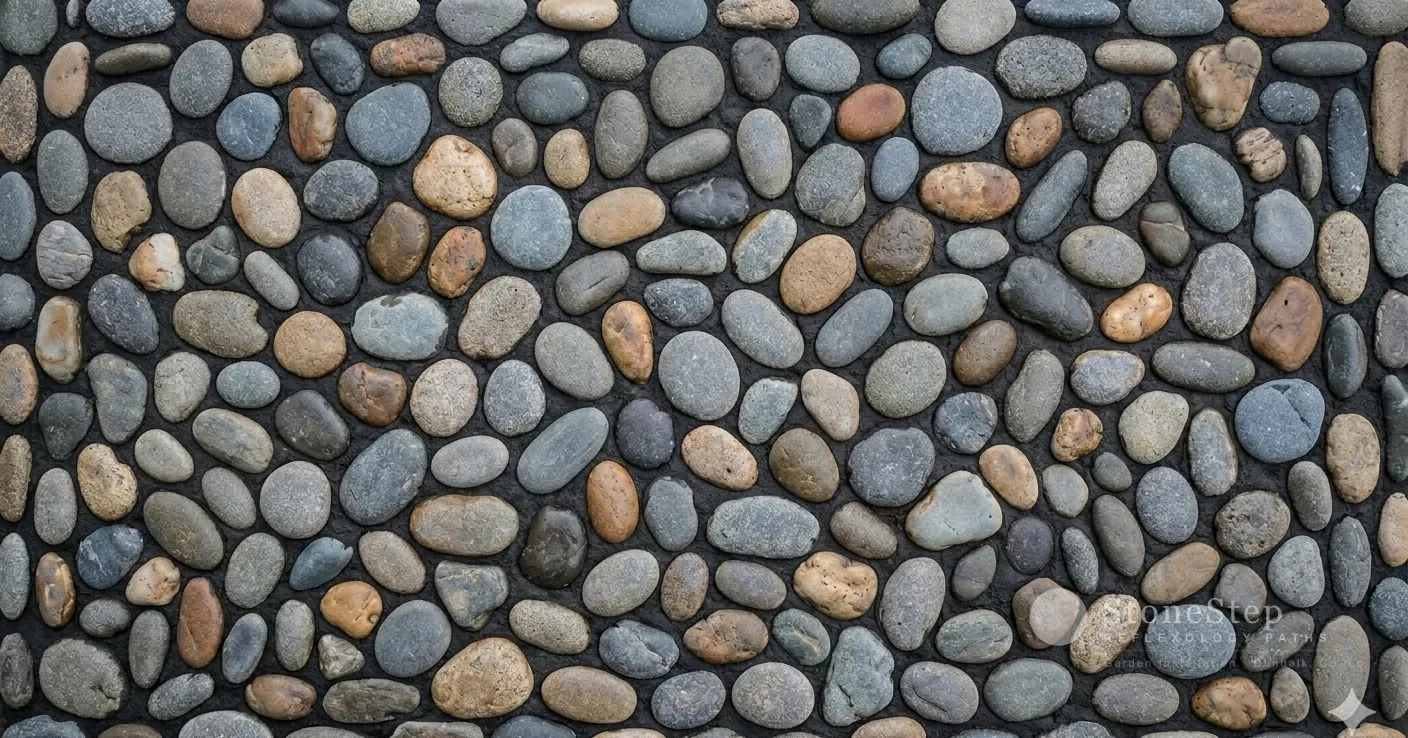
Smooth, closely-packed river pebbles and rounded cobbles have more surface area and more gaps between stones than a flat-laid paving surface. Debris, fine organic matter, and algae have more places to settle. The surface also retains moisture longer, particularly in Co. Louth’s climate, which means moss and algae growth is somewhat more persistent than on a flat paved surface in the same position.
This does not make maintenance difficult. It makes regular, light maintenance more rewarding than infrequent heavy maintenance.
Year-Round: Basic Care
Rinse periodically. A light rinse with a garden hose, washing organic debris out from between the pebbles, is the most effective regular maintenance task. Once every two to four weeks through the growing season, when organic material is accumulating rapidly, is adequate for most Co. Louth positions. This takes five minutes.
Brush after rinsing. A stiff hand brush worked along the path surface after rinsing removes debris that the hose dislodges but does not carry away. This also helps keep the pebble surfaces clean and prevents surface algae from establishing.
Inspect the stones. Each time you walk the path, you are inherently inspecting it. If any stone feels loose underfoot, or if a stone has shifted from its set position, note it. A shifted stone does not need immediate attention unless it creates an uneven surface that is a hazard underfoot, but it should be addressed in the next maintenance round.
Spring: Annual Reset
Full clean. In early spring, before the path is in regular barefoot use for the season, carry out a thorough clean with a proprietary stone patio cleaner or a diluted neutral stone cleaning product. Apply with a brush, leave for the recommended contact time, scrub gently, and rinse thoroughly. This removes winter algae growth, any organic staining from autumn debris, and restores the surface to its clean working condition.
Re-set any shifted stones. A reflexology path on a sound mortar base should not produce many or any shifted stones. In the first spring after installation, check carefully for any stones that have settled slightly in the mortar during the first winter. If any are loose, a small amount of exterior tile adhesive or stone mortar can be used to re-set them from the surface. This is a five-minute task per stone.
Inspect the mortar bed edges. Where the path surface meets its edge restraints or planted borders, check for any gapping that has developed. Small gaps can be filled with a mortar mix or a flexible exterior sealant. This prevents water finding a route under the mortar bed at the path margins.
The Mortar Bed: What It Needs
The mortar bed into which the pebbles are set does not require sealing and does not deteriorate in normal Irish weather conditions. Once properly cured, it holds the stones in position without further treatment.
What can affect the mortar bed over time is persistent water ingress at the path edges or poor drainage beneath the path. Both are design issues rather than maintenance issues: a correctly installed reflexology path has adequate drainage designed in, and the edges are properly finished to exclude water at the margins.
If the mortar bed develops a crack or shows signs of lifting in a specific area, this typically indicates ground movement beneath that section. This is worth addressing promptly, as a compromised mortar bed section allows water underneath it, which can extend the affected area through freeze-thaw cycles. Contact us if you notice any area where the surface has lifted; re-bedding a section of reflexology path is a straightforward repair.
Moss and Algae Management
Moss growth at the edges of a reflexology path, in the planted margins beside it, is often desirable. It contributes to the aesthetic of the path in an Irish garden context and does not affect the walking surface.
Moss on the pebble surfaces themselves is a different matter. Wet moss on curved pebble surfaces is slippery. It reduces the safe grip of the path and diminishes the intended sensory experience underfoot.
For most Co. Louth gardens, one application per year of a proprietary algaecide or patio cleaner, applied in late summer before the damp season begins, is sufficient to inhibit moss regrowth on the walking surface through the winter and spring. Products formulated for outdoor natural stone use are appropriate; avoid bleach, which damages some stone types.
In persistently shaded positions with very high moisture, a second application in early spring may be needed. This is an annual cost of approximately €20 to €40 in product and an hour of time.
What a Reflexology Path Does Not Need
For comparison, it is worth being explicit about what is not required.
No sealing. The rounded pebbles and cobbles in a reflexology path are not porous flat stone that requires a penetrating sealer to protect against frost or staining. The mortar bed does not require surface sealing. There is no sealing schedule.
No re-jointing. There are no exposed joint lines between flat slabs to crack, crumble, or require re-pointing. The gaps between pebbles are part of the surface design and do not deteriorate in the same way as mortar pointing between paving slabs.
No resurfacing. A correctly installed reflexology path does not need resurfacing. The pebbles themselves do not wear out; they are geological materials that have survived river action for centuries. The surface you have at year five is the surface you will have at year thirty.
Running Cost Summary
For a residential reflexology path of 8 to 10 metres in Co. Louth, the realistic annual running cost involves:
Time: approximately two to four hours per year across regular rinsing, the annual spring clean, and any minor re-setting of shifted stones.
Materials: an annual or twice-annual application of algaecide or patio cleaner, costing €20 to €40 per year. No sealing costs. No jointing costs.
Professional maintenance: not required under normal circumstances. If a section of mortar bed requires re-bedding due to ground movement, or if a larger area of the path surface needs professional cleaning, contact us. A site visit to assess and address a specific issue is typically completed within a half-day.
The total annual running cost of a residential reflexology path in Co. Louth, in materials and professional time, is close to zero in most years. The investment is in the initial installation. What follows is a modest commitment of regular, light care.
Looking After the Path Through the Seasons
Spring: Clean thoroughly. Re-set any shifted stones. Inspect edges.
Summer: Light rinsing every two to four weeks. Enjoy the path.
Autumn: Clear organic debris regularly. Apply algaecide before the damp season arrives.
Winter: Continue light rinsing. Avoid salt on the path surface. Check for any lifted sections after hard frost.
For more on what a reflexology path installation involves and what it costs, see our reflexology garden paths service and our reflexology path cost guide.
Request a free design consultation →
Frequently Asked Questions
Will the pebbles loosen over time? On a properly set mortar bed, individual pebbles do not loosen under normal use. The mortar cures around the lower portion of each stone and holds it firmly. The most common cause of loosening is insufficient mortar depth at the setting stage, or impact damage from a heavy object. If a pebble does work loose, it can be re-set quickly with exterior tile adhesive.
How do I clean the path before barefoot use in spring? A diluted neutral stone cleaner applied with a brush and rinsed thoroughly is sufficient. Allow the path to dry completely before barefoot walking. If the surface has developed significant algae growth over winter, a proprietary algaecide treatment followed by the standard clean is the right sequence.
Can I use a jet washer on a reflexology path? Low-pressure rinsing is appropriate. High-pressure jet washing directed directly at the path surface can dislodge the mortar from between pebbles and gradually erode the mortar bed surface around the stones. Use a wide-angle low-pressure nozzle at a distance, or simply use a garden hose, which is sufficient for most cleaning purposes.
What happens to the path in prolonged drought? Ireland rarely experiences the extreme prolonged drought conditions that would cause a mortar bed to crack significantly from shrinkage. In an unusually dry summer, keeping the path lightly watered prevents excessive drying. This is not a regular requirement in Co. Louth conditions.
Is there anything that damages reflexology path pebbles? Road salt or de-icing grit that contains salt should not be applied to or washed across the path. Salt crystallisation within the mortar bed causes progressive damage over successive freeze-thaw cycles. Use fine grit or sharp sand for traction near the path in icy conditions rather than salt-based products.
Have a question about your garden?