
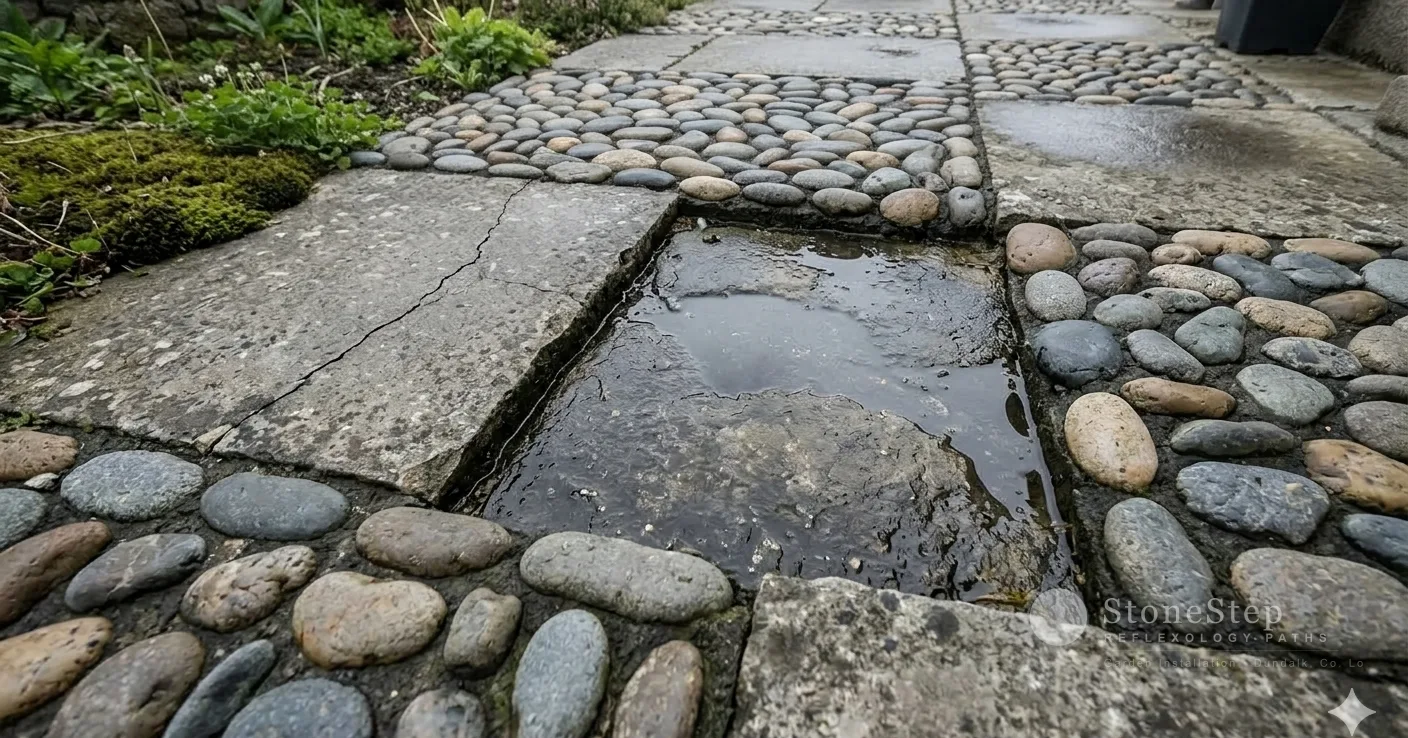
Caring for Natural Stone Paving in Ireland
Natural stone paving asks relatively little of you. Compared to decking, which rots; to block paving, which fades and grows weeds between the joints; or to concrete, which stains and cracks with some regularity, natural stone is a low-maintenance material.
But low maintenance is not no maintenance. Stone paving in a Co. Louth garden is outside in the rain, the frost, and the damp for twelve months of the year. It accumulates organic debris. It grows moss in shaded corners. It needs sealing periodically if it is to remain protected against the specific demands of a northeast Irish climate.
This guide covers what natural stone paving needs from you across the year, what each maintenance task involves, and what the realistic time commitment is. None of it is complicated or particularly time-consuming. All of it matters.
Year-Round: The Basics
Sweep regularly. A weekly sweep of the paved surface removes the leaf litter, fine organic debris, and wind-blown grit that accumulate on any outdoor surface. This is worth doing regardless of stone type. Organic debris breaks down over time, leaves staining compounds on porous stone, and provides the nutrient base that moss and algae need to establish. Keeping it clear is the simplest and most effective maintenance task available.
Deal with spills promptly. For sandstone and limestone in particular, prompt attention to organic staining, including leaf tannins, oil from garden furniture, and food or drink spillage on a patio surface, prevents the staining from penetrating below the sealer and into the stone. A diluted washing-up liquid solution and a soft brush is sufficient for most fresh staining.
Keep drains and channels clear. If the paved area drains into a channel drain or a gap between the patio edge and the lawn, keep it clear of accumulated debris. Blocked drainage forces water back across the surface, where it increases moss and algae growth and, in winter, increases the risk of ice forming on the paving rather than running away.
Spring: Post-Winter Assessment
The first warm, dry days of spring are the right time to assess the paving after the winter.
Walk the surface slowly. Look and listen for any slabs that rock slightly underfoot, any joints that have opened, any obvious changes in level between adjacent slabs. A small amount of joint settlement in the first winter after a new installation is normal; in an established paving surface, any movement at all is worth noting.
Check the jointing. Where polymeric jointing compound has been used, check that the joints are still tight. If small gaps have appeared at the surface, a light brush-in of dry polymeric jointing sand, followed by a gentle misting with water, re-activates the polymers and closes the gap. This takes twenty minutes and should be done before the growing season begins.
Clean the surface. A thorough spring clean with a proprietary stone patio cleaner removes winter algae growth, organic staining, and any efflorescence (the white powdery deposit that can appear on new stone in its first one or two years as mortar salts migrate to the surface). Follow the product instructions for your stone type and rinse thoroughly.
Assess the seal. For sandstone and limestone, pour a small amount of water onto the stone surface. If the water beads on the surface for several seconds before being absorbed, the sealer is still active. If the water is absorbed immediately or within a few seconds, the stone needs resealing.
Sealing: What, When, and How
Sealing is the most important periodic maintenance task for sandstone and limestone paving in Co. Louth. It is not required for granite and is not typically necessary for quality slate.
What sealer to use. For outdoor stone paving, a penetrating silicone or water-repellent sealer is the appropriate product. It works by penetrating into the stone and lining the pores from within, reducing water absorption without forming a surface film that could trap moisture beneath it or alter the appearance of the stone. Avoid surface-coating sealers, which sit on top of the stone and peel over time.
For sandstone, an impregnating sealer formulated specifically for natural stone outdoor use is the right product. For limestone, the same applies, but check that the product is pH-neutral, as acidic formulations can etch limestone surfaces.
When to seal. Apply sealer to a completely clean, completely dry stone surface. In a Co. Louth garden, this means either a settled dry period of at least three to four days in late spring or early autumn, when the stone surface has had time to dry through from any recent rain. Do not seal in direct summer sun, which causes the sealer to cure too quickly.
How often. For sandstone in a typical Co. Louth garden position, every three to four years. In more exposed or shaded positions with higher moisture and slower drying, every two to three years. For limestone, every four to five years in most positions. Apply the water-bead test each spring; if it fails, reseal regardless of when you last did it.
How to apply. Clean and dry the surface thoroughly. Apply the sealer with a brush or roller in a thin, even coat. Allow to penetrate for the time specified by the product. Wipe off any excess before it dries on the surface. Allow the recommended drying time before use. Most penetrating sealers dry in two to four hours and are fully cured within 24 to 48 hours.
Summer: Algae and Moss Management
Algae and moss grow on outdoor stone in any shaded, moist position in Ireland, which describes a significant proportion of Co. Louth gardens for most of the year.
A light growth of moss at the edges of paving, in the joints, and in the margins adjacent to planting is normal and in a wellness or garden context is sometimes acceptable aesthetically. Moss on the walking surface of the stone itself is a different matter. Wet moss is slippery and constitutes a genuine hazard on paths and patio surfaces.
Preventing growth. The most effective prevention is good drainage (water that drains away quickly does not sustain moss and algae) and occasional brushing to remove the organic debris that moss establishes in. A proprietary algaecide or patio cleaner applied once a year, ideally in late summer before the damp autumn season begins, inhibits regrowth effectively.
Removing growth. For established moss and algae, a diluted proprietary patio cleaner applied with a brush, left for the product’s recommended contact time, and then scrubbed and rinsed is effective for most growth. For heavier infestations, a second application may be needed. Avoid jet washing at high pressure, which can erode the surface of softer stones like sandstone over time and can dislodge jointing compound. A low-pressure rinse is appropriate after applying cleaner.
Do not use bleach on natural stone. It is effective at killing moss but causes discolouration and long-term surface damage to porous stone types.
Autumn: Leaf Clearance
Autumn is the most active period for natural stone maintenance in a Co. Louth garden.
Leaves from certain trees, particularly oak, sycamore, and lime, contain high concentrations of tannin and other compounds that stain porous stone if left in contact with the surface for more than a few days in wet conditions. A sealed surface resists this staining; an unsealed or under-sealed surface can develop persistent dark staining from autumn leaf deposits that is very difficult to remove after the fact.
Clear leaves from stone paving regularly through October and November. This is the simplest and most effective action available.
Winter: What to Watch
In hard frost, stone paving becomes icy. This applies to all outdoor stone surfaces. A riven or naturally textured finish provides significantly better grip than a smooth or polished surface, but in genuinely icy conditions, all exterior surfaces require caution.
Do not use rock salt on natural stone paving. Salt is very effective at melting ice but causes serious surface damage to sandstone and limestone by accelerating moisture penetration and crystallising salt deposits within the stone structure. Use fine grit or sharp sand for traction on icy stone paving instead.
If the surface has been properly sealed and the sub-base drainage is sound, winter weather should produce no structural changes to the paving. The spring assessment will tell you if anything needs attention.
What Good Maintenance Adds Up To
Done consistently, natural stone paving maintenance in Co. Louth amounts to roughly this:
A regular sweep. One spring clean. A post-winter joint check. A resealing every three to four years for sandstone, less often for limestone. Leaf clearance in autumn. The grit-not-salt rule in winter.
That is not a large commitment for a surface that will serve for thirty to fifty years. The connection between the maintenance schedule and the life of the paving is direct. The stone does the rest.
See our stone type guide and our garden paving service for more on the materials and what their installation involves.
Frequently Asked Questions
Can I pressure-wash natural stone paving? Low-pressure rinsing is fine and useful for removing surface deposits after cleaning. High-pressure washing with a jet washer, particularly at close range, can erode the surface of sandstone and force water into the joints under pressure, dislodging polymeric jointing compound. Use a low-pressure fan nozzle at a reasonable distance if using a power washer.
What should I do if jointing compound is washing out of the joints? Polymeric jointing compound does not wash out of sound joints under normal conditions. If it is washing out, either the compound was not properly activated at installation (it needs to be dampened and cured correctly to bond), or the joints are experiencing movement from sub-base settlement. In the first case, a simple re-application solves the problem. In the second, the movement is the issue to address.
How do I remove oil staining from a natural stone patio? Fresh oil: blot rather than wipe, apply a proprietary degreasing stone cleaner, leave for the recommended time, scrub gently and rinse thoroughly. Old, set oil staining is more difficult. A poultice of degreasing agent left in contact with the stone for several hours is more effective than surface application. For persistent staining on sandstone or limestone, a specialist stone cleaning product formulated for oil removal is worth using.
Is there anything I should not put on natural stone paving? Rock salt or road grit (which contains salt): avoid, as it damages porous stone. Bleach: effective against moss but causes discolouration and surface damage. Acidic cleaners (vinegar, lemon-based products): appropriate on some stone types but will etch limestone and calcareous sandstone. Always use products formulated for the specific stone type.
Have a question about your garden?